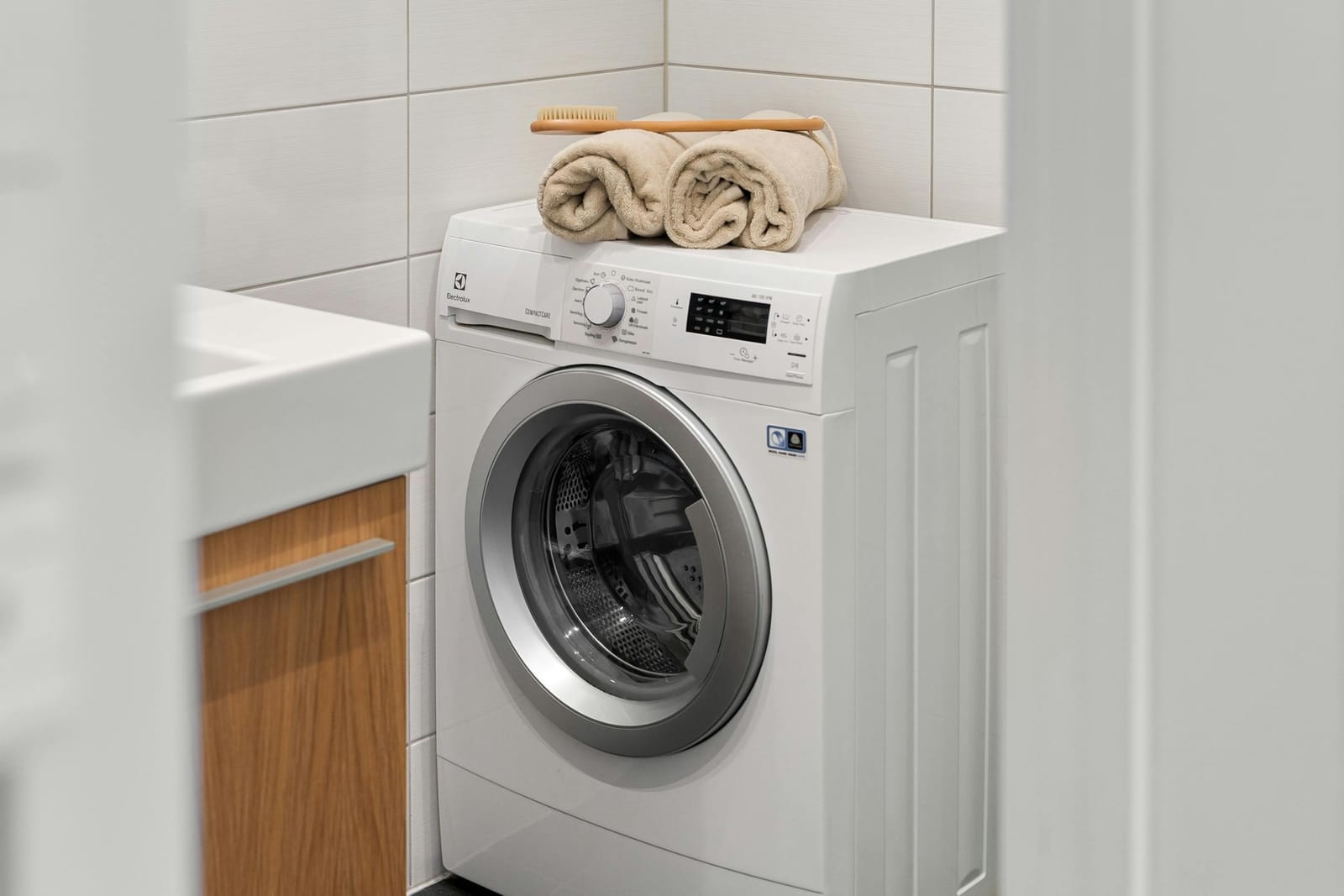
Dryers come in three flavours that each install differently. Vented dryers exhaust hot wet air through a duct. Condenser dryers collect the moisture in a tray inside the unit. Heat-pump dryers do the same as condensers but with a refrigerant cycle that uses half the energy. We install and replace all three across Sydney for homeowners and property managers.
What is involved
The install sequence differs by dryer type:
- Vented dryers. Need a vent path to outside. The duct run is checked for blockages (or installed new), the wall or roof penetration is sealed, and the external vent flap is checked to open freely. A short, straight duct run is much better than a long winding one; the manufacturer’s maximum duct length is respected.
- Condenser dryers. Self-contained but need ventilated space around the unit so the warm exhaust air can circulate away. Cabinetry-enclosed installs need ventilation grilles.
- Heat-pump dryers. Same install discipline as condensers, plus a slightly larger footprint and (sometimes) a 15 A circuit. Heat-pump dryers also need to be level or the compressor sounds louder than necessary.
For all three types we also:
- Verify the existing GPO is in good condition.
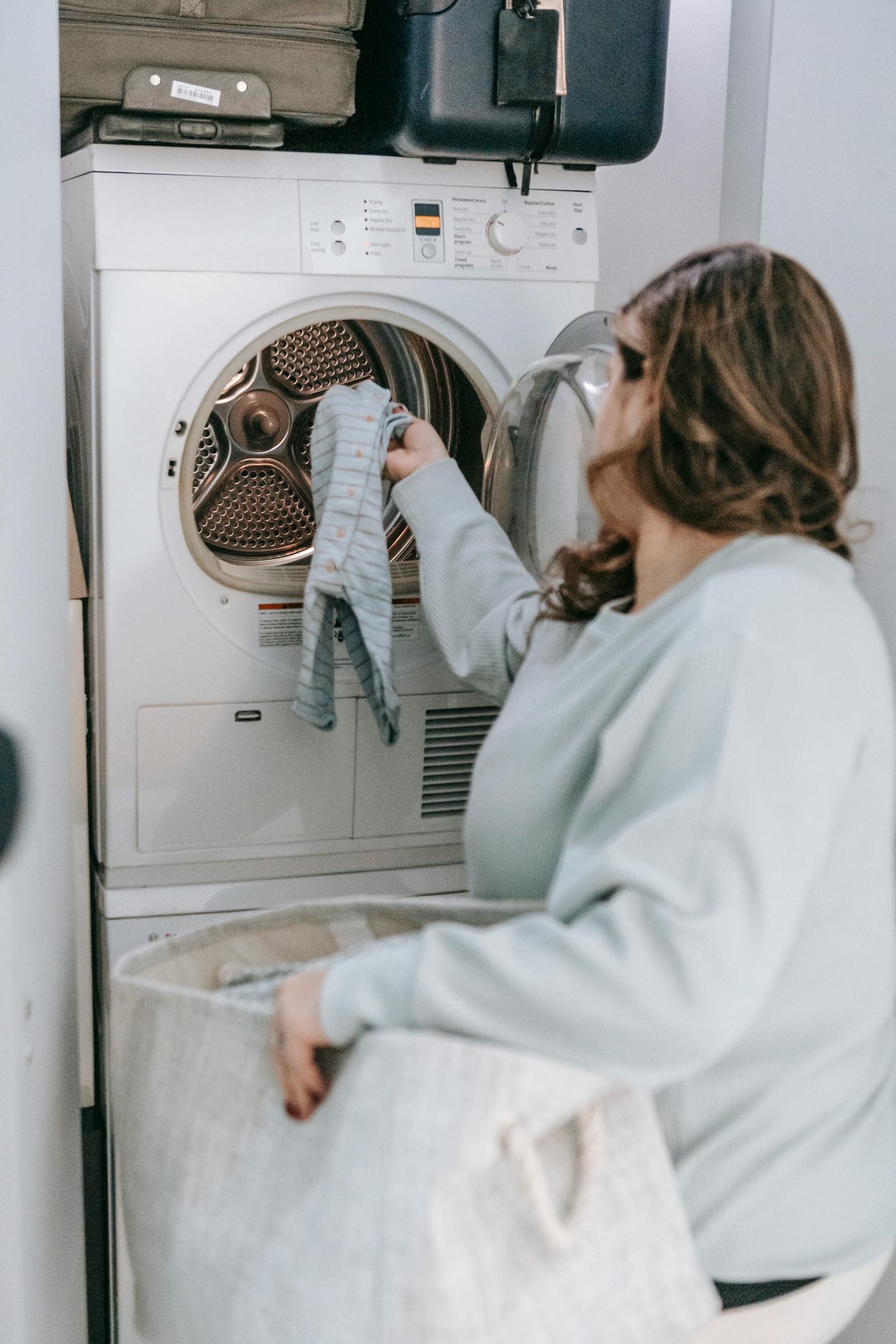
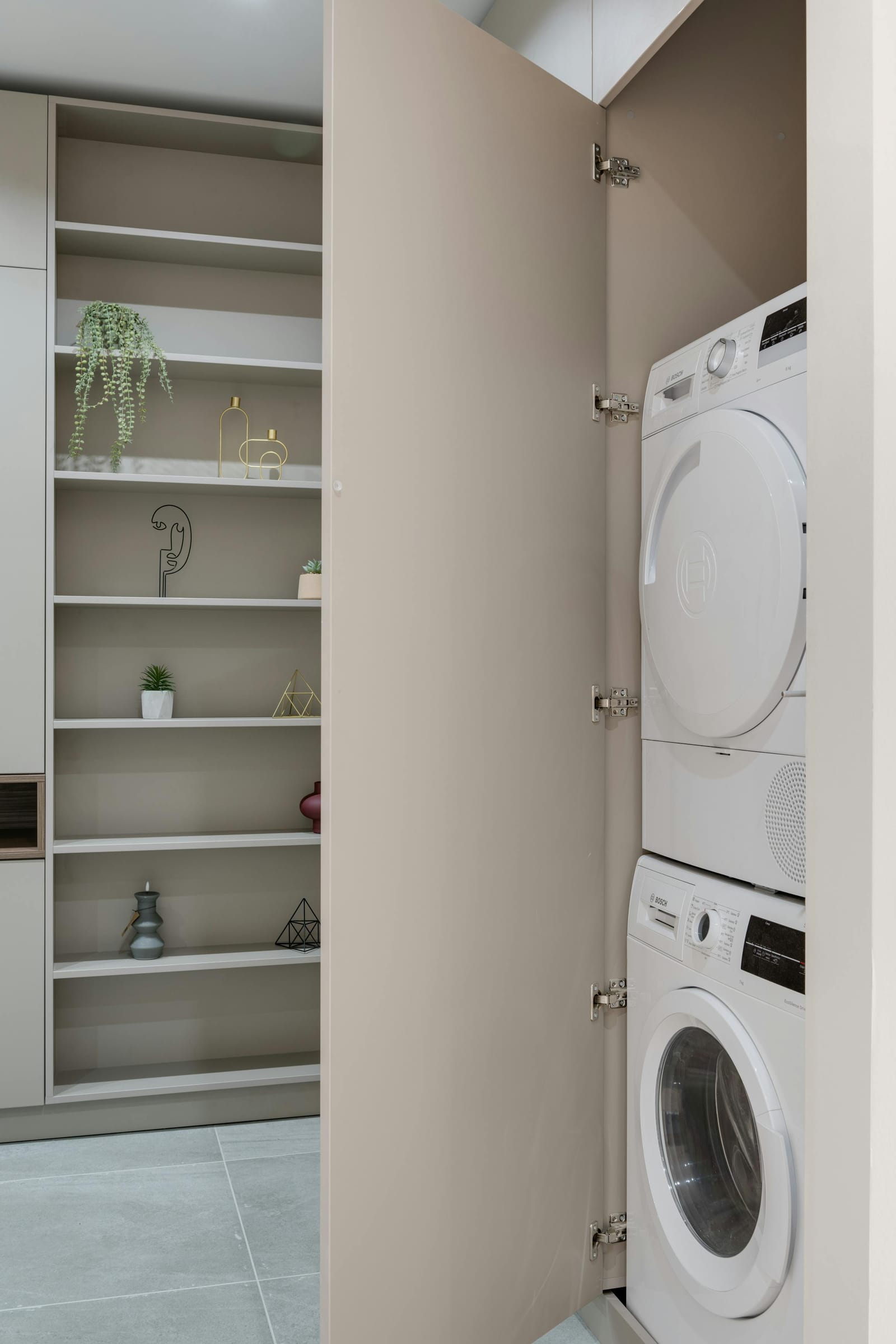
- Mount on the wall, on the floor, or stacked onto an existing washer per your preference.
- Test through a short cycle to confirm heat, drum rotation, and (for vented) airflow.
Replacing an existing dryer
A dryer that runs but does not heat, a heat-pump compressor that has failed, or a drum no longer rotating cleanly is sometimes more sensible to replace than to put through another dryer repair. Replacement is faster than a fresh install because the location, venting, and power are already in place:
- Diagnose the existing unit. We confirm the fault is genuinely beyond economic repair before going into replacement mode.
- Remove the old unit. Disconnect from the GPO and pull the vent duct away cleanly without damaging the wall or roof penetration.
- Inspect the venting (vented dryers). Long-life vented installs accumulate lint inside the duct walls. We clean the duct or replace it during the replacement.
- Inspect the GPO. Old GPOs sometimes show heat damage from a previous run-out. Replaced if needed.
- Install the new unit and recycle the old. Mounted or stacked per your preference, levelled, connected, tested.
A heat-pump dryer uses around half the electricity of a vented dryer for the same load. For households that use the dryer most days, the energy savings recover the price premium within 2 to 4 years. Closing the old vent path is part of the job when the new unit no longer needs it.
Brands we install
We install most dryer brands sold in Australia. Supply is usually yours or ours, whichever suits. The brands page has the full list; if the dryer you have in mind is not on it, ask before you buy and we will tell you straight.
When stacked changes the job
Stacking a dryer onto a washing machine saves laundry-room floor space but requires the manufacturer’s stacking kit (each brand has its own) and careful alignment. The kit straps the dryer to the washer so vibration during spin does not shake it loose. We fit the right kit for your washer-and-dryer combination.
How it works
- Send us the brand, model, dryer type, and install location. For replacements, tell us the symptom on the old unit.
- We confirm an appointment. Same-week common.
- We install on the day. Mounted or stacked, vented where required, tested through a cycle; old unit removed on replacements.
- You sign off and we remove the packaging.
Areas we cover
We cover Sydney CBD, Eastern Suburbs, Inner West, North Shore, and Sutherland Shire. Full detail on the coverage page. Every job is quoted before work starts.