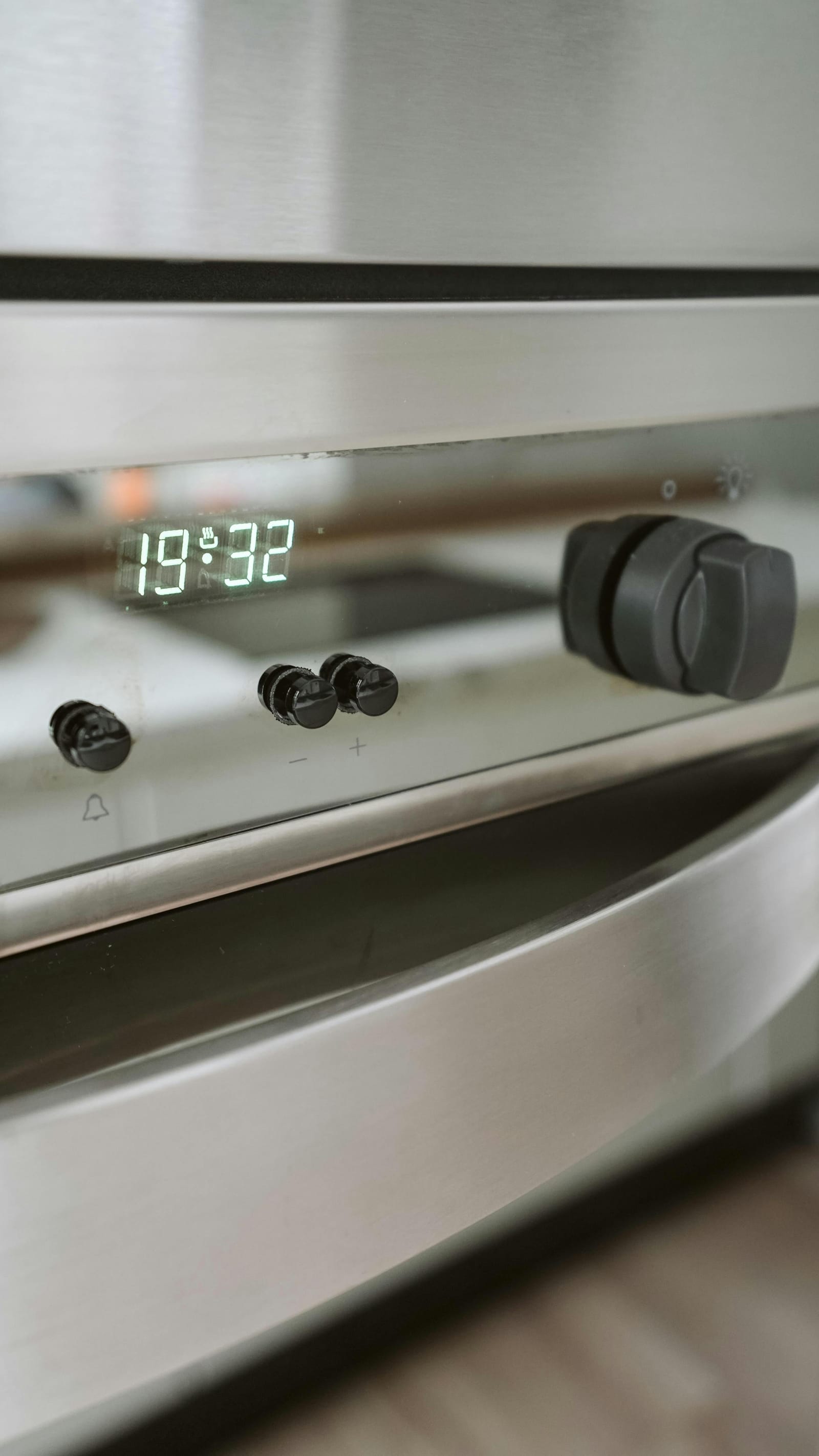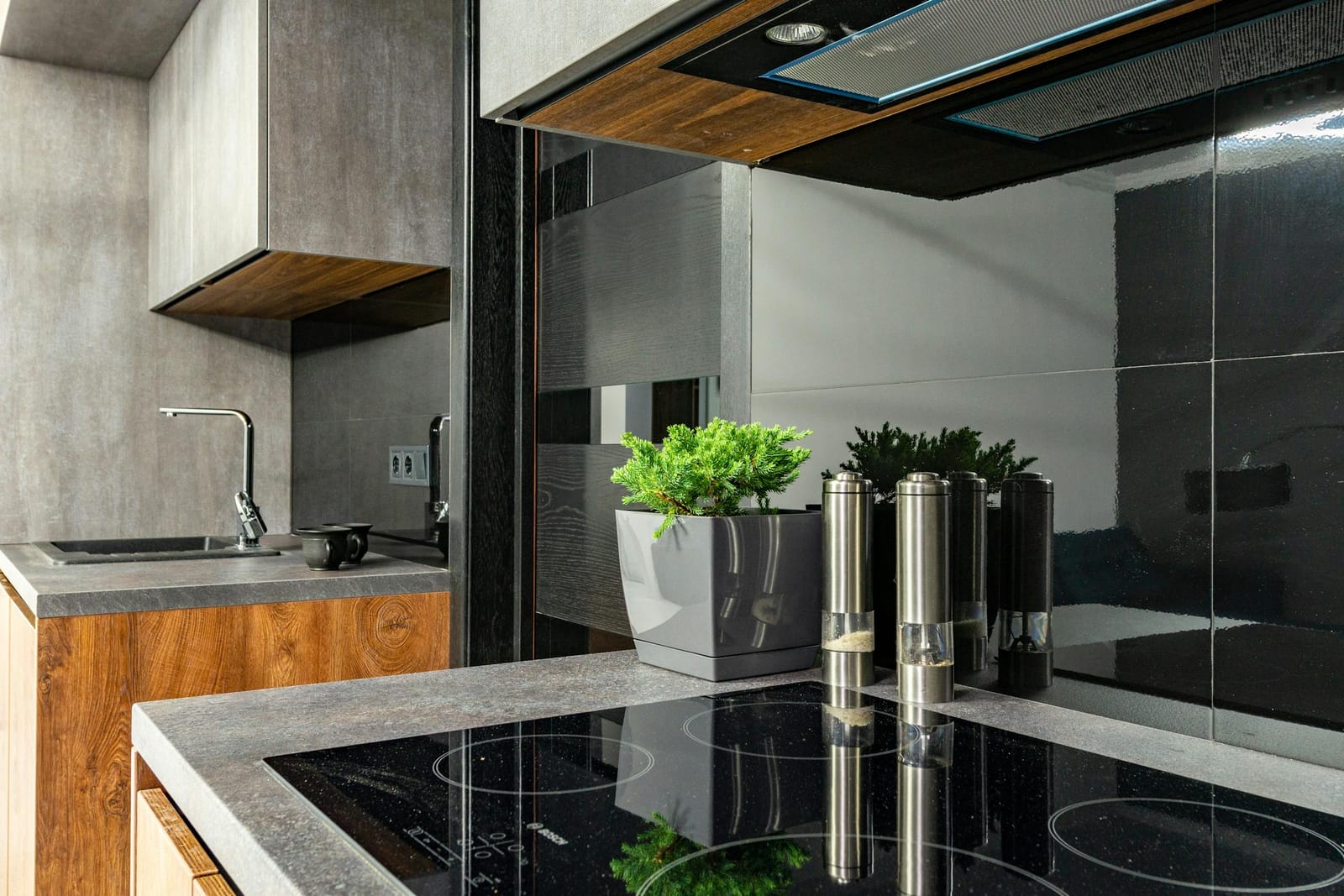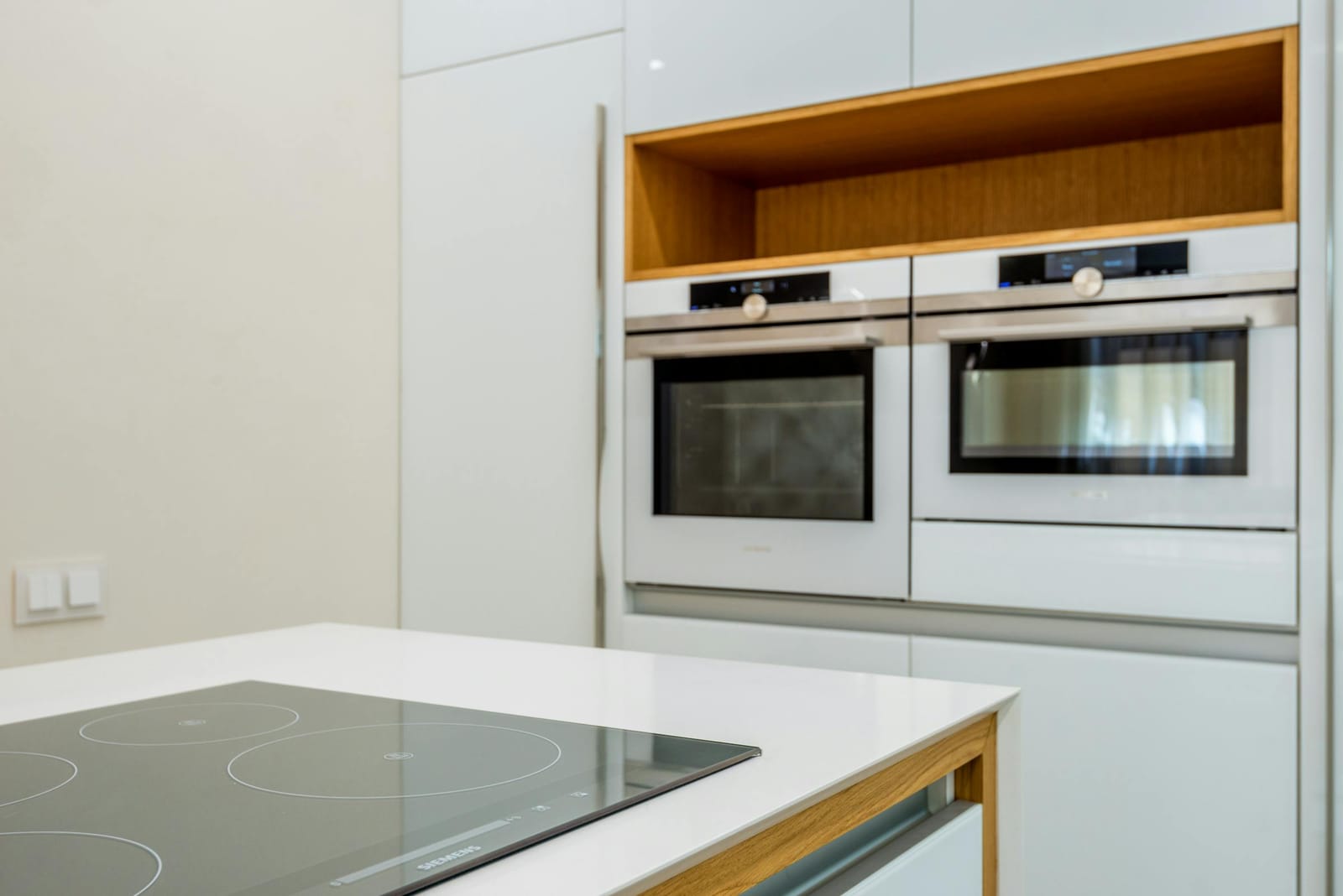
Ovens are the most demanding kitchen install. They run hot, they are heavy, they carry an electrical or gas circuit, and they need precise cavity clearances for thermal expansion. We install and replace built-in wall ovens, freestanding ovens, and pyrolytic models across Sydney for homeowners, renovators, and kitchen fitters.
What is involved
Most oven installs follow the same shape but the details differ by category:
- Built-in (wall) ovens. Lift into the prepared cavity, level on the runners, secure to the cabinetry, connect the power, and check the door swings clear of the joinery. Cavity airflow is checked since pyrolytic models in particular need rear ventilation.
- Freestanding ovens. Position into the gap between cabinetry, level on the adjustable feet, connect to the dedicated GPO or hardwired circuit, and anti-tip restraint where the manufacturer specifies it.
- Electrical connection. Most ovens above 2400 W are on a dedicated circuit. We confirm the circuit is correctly rated and issue a certificate of compliance for the work.
Gas ovens: licensed gas fitting
Gas ovens have a different install discipline from electric. The gas line, the injector configuration, the ventilation requirements, and the compliance paperwork all sit under separate NSW regulation. Only a licensed gas-fitter may connect a gas appliance to the supply. Our technicians hold that licence, and every gas oven install covers:
- Gas line connection. The existing gas point is tested for leaks, the supply pressure is measured, and the new oven is connected with the manufacturer-specified flexible hose or hard pipe.
- Injector configuration. Most gas ovens ship with both natural-gas and LPG injectors. The correct set is fitted for the gas type at your address and the data plate is updated to record the change.
- Burner setup. Primary and secondary aeration are adjusted so the flame is clean blue, the right shape, and the right height. Yellow tipping or lazy flames indicate a setup problem and are corrected before sign-off.
- Ventilation check. Built-in gas ovens need cavity ventilation for combustion air and exhaust. We confirm the cabinetry meets the manufacturer’s clearance specification.
- Certificate of gas compliance. Issued on completion. You keep a copy and lodge it with your insurance and (if rented) your property manager.
Replacing an old oven
A failed element you fix. A failed thermostat plus a cracked door seal plus an obsolete fan motor is usually the point where replacement is more sensible than another oven repair. Replacement is faster than a first-time install because the cavity, cabling, and ventilation paths are already in place:
- Disconnect and remove the old oven. Electrical safety first. Once isolated, the unit lifts out of the cavity onto the floor protector.
- Inspect the cavity. Insulation degrades, cabinetry rails sag, and the wall terminal block sometimes carries scorch marks from a previous fault. We inspect and report what we find.
- Refresh the electrical termination. A new oven gets a fresh terminal block, fresh tail, and a fresh compliance certificate.
- Install and verify. The new unit is levelled, secured, and run through a full thermal cycle to verify the fan, the element, and the control board.
We recommend replacement over repair when:
- A repair quote runs above 50 percent of a comparable new unit.
- Spare parts are no longer supplied by the manufacturer for that model.
- The same fault has come back more than once.
Brands we install
We install most oven brands sold in Australia. Supply is usually yours or ours, whichever suits. The brands page has the full list; if the oven you have in mind is not on it, ask before you buy and we will tell you straight.
Where new-install quality shows later
A badly fitted oven looks fine on day one. The problems show up six to twelve months in: a door that drops because the hinges were not pre-tensioned, a control board that overheats because the rear cavity has no clearance, or a power cord pinched against the rear wall. The right install on day one prevents those calls.
How it works
- Send us the brand, model, fuel type (electric or gas), and the install location. If it is a replacement, tell us what the old unit is doing.
- We confirm the appointment window. Same-week common; renovation-stage installs scheduled around your fitter.
- We install on the day. Lifting, levelling, securing, connecting, testing. Old unit removed and recycled on replacements.
- We hand over the compliance paperwork and remove the packaging.
Areas we cover
We cover Sydney CBD, Eastern Suburbs, Inner West, North Shore, and Sutherland Shire. Full detail on the coverage page. Every job is quoted before work starts.