
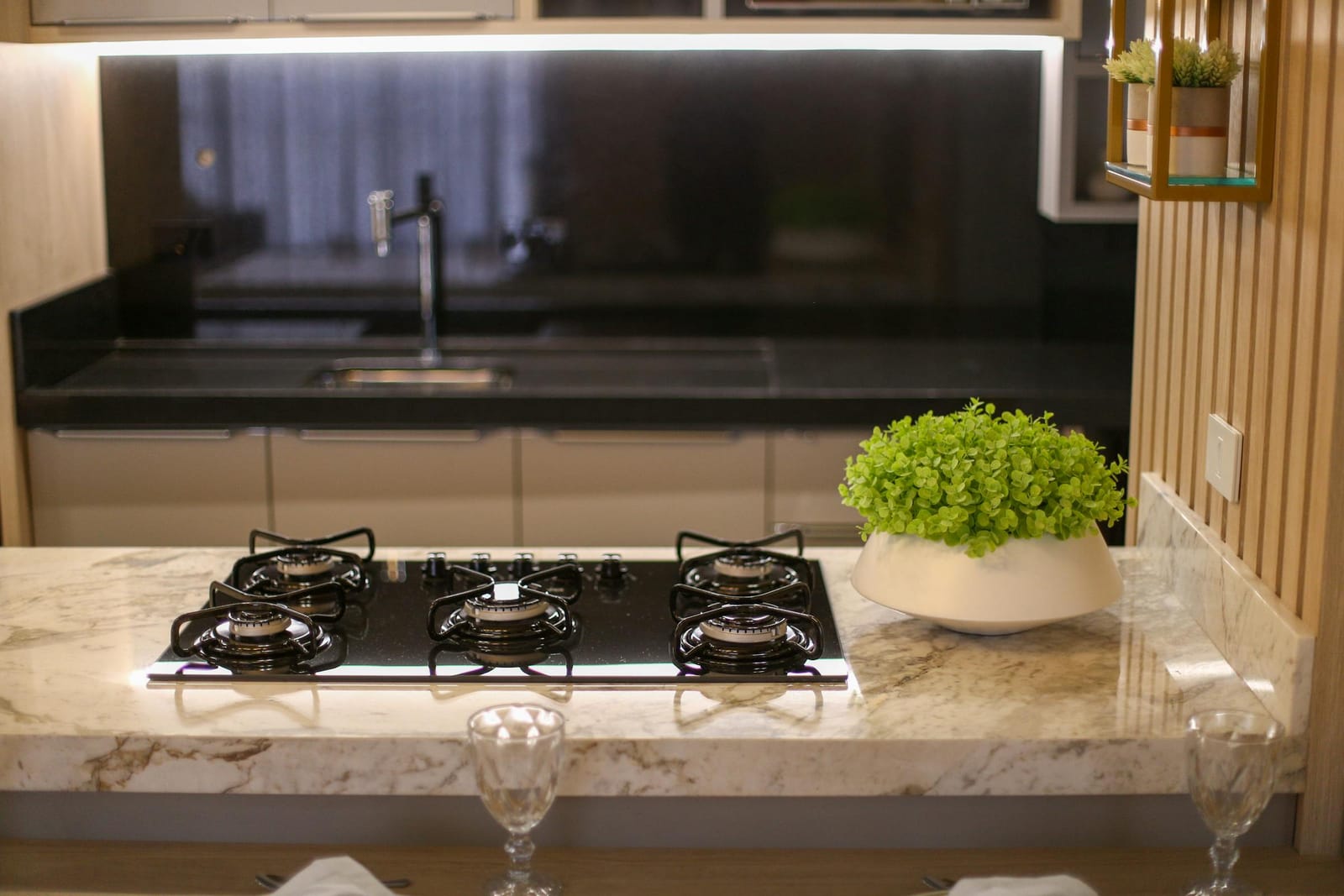
Gas cooktops are the most common cooktop type in Sydney kitchens, and sooner or later most of them reach replacement: burners past their service life, a cracked trivet frame, valves that no longer meter cleanly, or simply a kitchen refresh. Here is what the job actually involves — and why it is not a DIY swap.
Why gas replacement is licensed work
In NSW, only a licensed gas-fitter may connect a gas appliance to the supply, and every new gas appliance installation must end with a certificate of gas compliance. That is not paperwork for its own sake: the certificate is what insurers ask for on claims involving gas appliances, what strata schemes want before a unit owner changes a cooktop, and what property managers require on tenant-arranged work.
The replacement, step by step
A like-for-like gas cooktop replacement reuses the existing cutout and gas point, which keeps the job contained:
- Cutout check. The benchtop opening is verified against the new unit’s template. Most current models fit standard openings; stone benchtops needing a larger cutout go to a stonemason first.
- Old unit out. The gas is isolated, the old cooktop is disconnected and lifted out, and the bench is cleaned back for a fresh seal.
- Gas connection. The supply pressure is tested and the new cooktop is connected with the manufacturer-specified hose or hard pipe — never a generic substitute.
- Injector configuration. Most cooktops ship with injector sets for both natural gas (mains) and LPG (bottled). The correct set is fitted for the property’s supply and the data plate is updated to record it.
- Burner tuning. Every burner is lit and adjusted. A healthy flame is clean blue and stable; yellow tipping, lazy flames, or popping on ignition are setup faults and get corrected before sign-off.
- Leak test. The line is pressurised and watched for any drop. A failed test means a leak; it is found and fixed before the appliance is commissioned.
- Certificate of gas compliance. Issued at the end of the job. Keep your copy with the appliance paperwork.
The full scope, including electric and induction work, is on our cooktop installation and replacement page.
Thinking of switching to induction instead?
Plenty of Sydney kitchens replace a gas cooktop with induction. It is a bigger job than like-for-like: the gas line is decommissioned and a dedicated high-current circuit takes its place, usually 32 A for a full-size unit. It is routine work, though, and it is quoted as one job so there are no surprises between trades. We cover the detail in Switching to induction: what’s involved.
Signs your gas cooktop is due
- Burners that will not hold a clean blue flame after cleaning and adjustment.
- Ignition that clicks without lighting, or keeps clicking after the burner lights.
- Valves that are stiff, or burners that will not hold a low simmer.
- A glass or enamel surface that is cracked around the burners.
Some of those are repairs rather than replacements — a cooktop repair visit settles which, with a quote before any work starts.